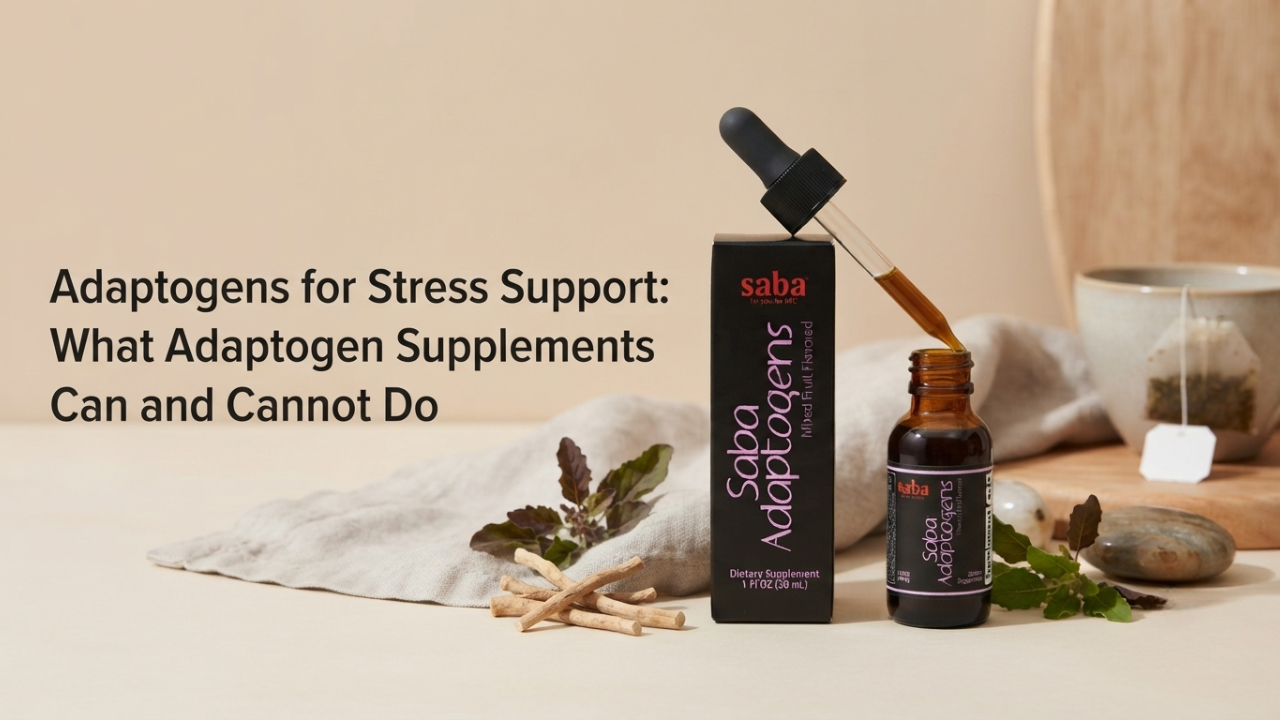
Adaptogens for Stress Support: What Adaptogen Supplements Can and Cannot Do
Modern life rarely slows down. Work pressures, poor sleep, and constant demands can take a real toll on the body and mind. It is no surprise that interest in adaptogen supplements has grown steadily in recent years. But what does the science actually say, and how do these botanicals fit into a realistic wellness routine?
What Are Adaptogen Supplements?
The term “adaptogen” is used in herbal and wellness literature to describe certain plants and natural substances thought to help the body respond to everyday stress. Many of the herbs now sold as adaptogen supplements have long histories of traditional use across Asia, Europe, and other parts of the world.
It is important to understand that “adaptogen” is not an FDA-recognized therapeutic category. The term covers a wide range of botanicals with very different chemistry, safety profiles, and levels of clinical evidence. In other words, not all adaptogens work the same way, and the research behind each one varies considerably.
Common Adaptogen Supplements and What Research Suggests
Here is a closer look at some of the most widely discussed adaptogenic herbs and what current evidence shows:
- Ashwagandha is one of the most studied adaptogenic herbs. Some preparations have shown potential in supporting perceived stress and sleep quality in clinical trials, though study sizes and extract types vary. A 2024 meta-analysis of nine randomized trials reported improvements in several stress-related measures.
- Rhodiola rosea has been traditionally used in parts of Europe and Asia and is studied for fatigue and stress-related outcomes. However, the National Center for Complementary and Integrative Health (NCCIH) concludes that reliable evidence remains insufficient for any health-related purpose.
- Schisandra is a berry-bearing botanical with a long history of traditional use and ongoing research into stress resilience, mental performance, and the body’s stress response pathways. Human evidence is still limited and varies by preparation.
- Panax ginseng has been widely researched across outcomes including fatigue, cognition, and physical performance, though evidence and safety considerations differ by dose and population.
- Licorice root is sometimes included in herbal stress support formulas, but its glycyrrhizin content can affect cortisol metabolism and raise blood pressure with high or prolonged use. It requires particular care and should not simply be described as cortisol lowering.
- Eleuthero, often called Siberian ginseng, has a history of traditional use related to stamina and resilience, though product-specific claims should always be evaluated against evidence for the exact preparation.
- Holy basil and certain adaptogenic mushrooms are increasingly popular in wellness products, but their “adaptogen” label should not be interpreted as proof of any specific clinical benefit.
Stress Support Starts With the Basics
No natural supplement can replace the habits that consistently support wellbeing. Regular movement, adequate sleep, balanced nutrition, hydration, meaningful relationships, and appropriate medical care all contribute to how the body handles everyday stress.
Adaptogen supplements may complement those habits for some people, but they are best viewed as an addition to a solid foundation, not a replacement for it. A healthier goal is appropriate support for the body’s stress response, not simply driving cortisol as low as possible.
How to Choose an Adaptogen Supplement Thoughtfully
If you decide to explore adaptogen supplements, keep the following in mind:
- Look for clearly identified botanical names and plant parts used on the label
- Choose products with transparent serving amounts and standardized extracts where relevant
- Introduce one new supplement at a time so you can notice how your body responds
- Look for realistic structure/function claims rather than disease-treatment promises
- Prioritize products from manufacturers who provide meaningful quality information
A Note on Safety
Natural does not automatically mean risk-free. Botanicals can cause side effects and may interact with medications. NCCIH notes specific cautions for ashwagandha involving pregnancy, thyroid or autoimmune disorders, and certain medications. Licorice root containing glycyrrhizin warrants particular caution for people with high blood pressure or heart and kidney conditions.
Always speak with a qualified healthcare professional before adding a new supplement to your routine, especially if you have an existing health condition or take prescription medications.
Conclusion
Adaptogen supplements represent an interesting area where traditional wellness practices and modern research increasingly intersect. Some ingredients, particularly ashwagandha, have more encouraging human evidence behind them, while research on others varies substantially in quality and relevance.
The best approach is informed and balanced. Understand the specific ingredient, evaluate the quality of the evidence, maintain realistic expectations, and keep the fundamentals of stress management at the center of your routine.
IMPORTANT INFORMATION AND DISCLAIMER
This article is provided for general educational and informational purposes only. It is not medical advice and is not intended to diagnose, treat, cure, or prevent any disease or health condition. Statements about botanical ingredients describe research on specific ingredients or preparations and should not be interpreted as guaranteed outcomes for any individual or product. Evidence, response, tolerability, and safety may vary according to the ingredient, extract, dose, formulation, duration of use, medications, and individual health status.
Always consult a qualified healthcare professional before beginning or changing a dietary supplement regimen, particularly if you have a medical condition, take prescription or over-the-counter medications, are pregnant or nursing, or are preparing for surgery. Licorice root containing glycyrrhizin warrants particular caution because excessive or prolonged intake may affect blood pressure, potassium levels, heart rhythm, and medication interactions.
These statements have not been evaluated by the Food and Drug Administration. Dietary supplements are not intended to diagnose, treat, cure, or prevent any disease.
| FOOTNOTES & REFERENCES1. National Center for Complementary and Integrative Health (NCCIH). Ashwagandha: Usefulness and Safety. Updated March 2023. NCCIH notes that some ashwagandha preparations may support stress and sleep in some studies, while study sizes and preparations vary.2. Arumugam V, Vijayakumar V, Balakrishnan A, et al. Effects of Ashwagandha (Withania somnifera) on stress and anxiety: A systematic review and meta-analysis. Explore (NY). 2024;20(6):103062. PMID: 39348746.3. National Center for Complementary and Integrative Health (NCCIH). Rhodiola: Usefulness and Safety. NCCIH concludes that there is not enough reliable evidence to determine whether rhodiola is useful for any health-related purpose.4. Ishaque S, Shamseer L, Bukutu C, Vohra S. Rhodiola rosea for physical and mental fatigue: a systematic review. BMC Complement Altern Med. 2012;12:70. PMID: 22643043.5. Łuszczak J, Kocki J. Clinical evidence for the adaptogenic effects of Withania somnifera and Rhodiola rosea – A systematic review with molecular interpretation of psychometric outcomes. Ann Agric Environ Med. 2026;33(1):3-11. PMID: 41906501.6. Panossian A, Wikman G. Pharmacology of Schisandra chinensis Bail.: an overview of Russian research and uses in medicine. J Ethnopharmacol. 2008;118(2):183-212. PMID: 18515024.7. Panossian A, Wikman G. Evidence-based efficacy of adaptogens in fatigue, and molecular mechanisms related to their stress-protective activity. Curr Clin Pharmacol. 2009;4(3):198-219. PMID: 19500070.8. National Center for Complementary and Integrative Health (NCCIH). Licorice Root: Usefulness and Safety. Updated April 2025. NCCIH notes that glycyrrhizin-containing licorice can cause serious adverse effects with high or prolonged exposure and may interact with medicines.9. Omar HR, Komarova I, El-Ghonemi M, et al. Licorice abuse: time to send a warning message. Ther Adv Endocrinol Metab. 2012;3(4):125-138.EDITORIAL NOTEReferences are provided for scientific and educational context. Findings from studies of individual botanicals, standardized extracts, doses, formulations, or study populations should not be interpreted as proof that every ingredient or finished product will produce the same results. Research on adaptogens continues to evolve, and the strength of evidence varies by ingredient and intended use.ABOUT THE SABAFORLIFE RESEARCH TEAMThe SabaForLife Research Team reviews scientific literature in nutrition, metabolic health, healthy aging, stress support, and nutritional ingredients. Our goal is to translate emerging research into clear, responsible wellness education. Content is reviewed for educational accuracy and is not intended to replace individualized guidance from a qualified healthcare professional.IMPORTANT INFORMATION & DISCLAIMERThis article is provided for general educational and informational purposes only. It is not medical advice and is not intended to diagnose, treat, cure, or prevent any disease or health condition. Statements about botanical ingredients describe research on specific ingredients or preparations and should not be interpreted as guaranteed outcomes for any individual or product. Evidence, response, tolerability, and safety may vary according to the ingredient, extract, dose, formulation, duration of use, medications, and individual health status.Always consult a qualified healthcare professional before beginning or changing a dietary supplement regimen, particularly if you have a medical condition, take prescription or over-the-counter medications, are pregnant or nursing, or are preparing for surgery. Licorice root containing glycyrrhizin warrants particular caution because excessive or prolonged intake may affect blood pressure, potassium levels, heart rhythm, and medication interactions.†These statements have not been evaluated by the Food and Drug Administration. Dietary supplements are not intended to diagnose, treat, cure, or prevent any disease.Saba – For You. For Life.™ | SabaForLife.com |